
THE FINISH
Published by Vital Hydrographic
THE MIND
The Five Key Principles
Edition 1
Most work looks finished long before it truly is.
The surface is clean, the colour is right, and the job is signed off.
Yet beneath that, there is always a quiet question. Was it done properly, or was it simply done quickly?
This edition is not about techniques or tools. It is about the decisions made when no one is watching. The moments where shortcuts are tempting, standards are tested, and intent matters more than the final appearance.
The principles that follow are not aspirations. They are checks. Quiet markers we hold our work against, every time.
If you have ever rushed a step and hoped it would not show,
if you have ever known something was not quite right but sent it anyway,
if you have ever wondered where quality is truly won or lost,
this is for you.
I. Integrity
Integrity is where everything starts. Not as a statement, but as behaviour. It lives in the first conversation, in how expectations are set, in pricing that reflects reality, and in the honesty to say when something is not right.
At Vital, integrity is not imposed. The people here bring it with them. They recognise it in the way the company operates and choose to buy into it. That shared understanding becomes a filter for every decision that follows.
When integrity is present at the start, processes align naturally. Materials are chosen for the right reasons. Time is respected. Standards hold without needing constant enforcement. It is not something applied later to fix problems. It is the foundation everything else is built on.
"When integrity is present at the start, processes align naturally."
"When assessment is done properly, problems are prevented rather than corrected"
II. Assessment
Experience teaches that not all work is equal. Different substrates behave differently. Expectations vary. Some jobs require space, focus, and uninterrupted time to be done properly.
Assessment is the discipline of understanding this before any work begins. It means matching expectations to capability, allocating the right person to the right process, and recognising when a job cannot be rushed or squeezed in between others.
This stage is often invisible, but it carries weight. When assessment is done properly, problems are prevented rather than corrected. When it is rushed or ignored, the cost appears later, usually multiplied.

III. Materials
Materials are chosen first by reputation and quality. After that, by reliability and how well they work together as a system. Nothing exists in isolation. Each product must complement the next, from preparation through to finish.
Work is often refused when materials are compromised to save cost. Longevity matters. What leaves the unit represents the company long after the job is finished. In that sense, every piece becomes a business card.
Responsibility extends to the smaller choices as well. Rags are collected, washed, and reused. Waste is reduced where possible. These decisions are rarely visible, but they matter.
Shortcuts do not respect the process, the finish, or the work itself.
Materials are the unseen language.
They are hidden integrity.
" Materials are the unseen language,
They are hidden integrity."
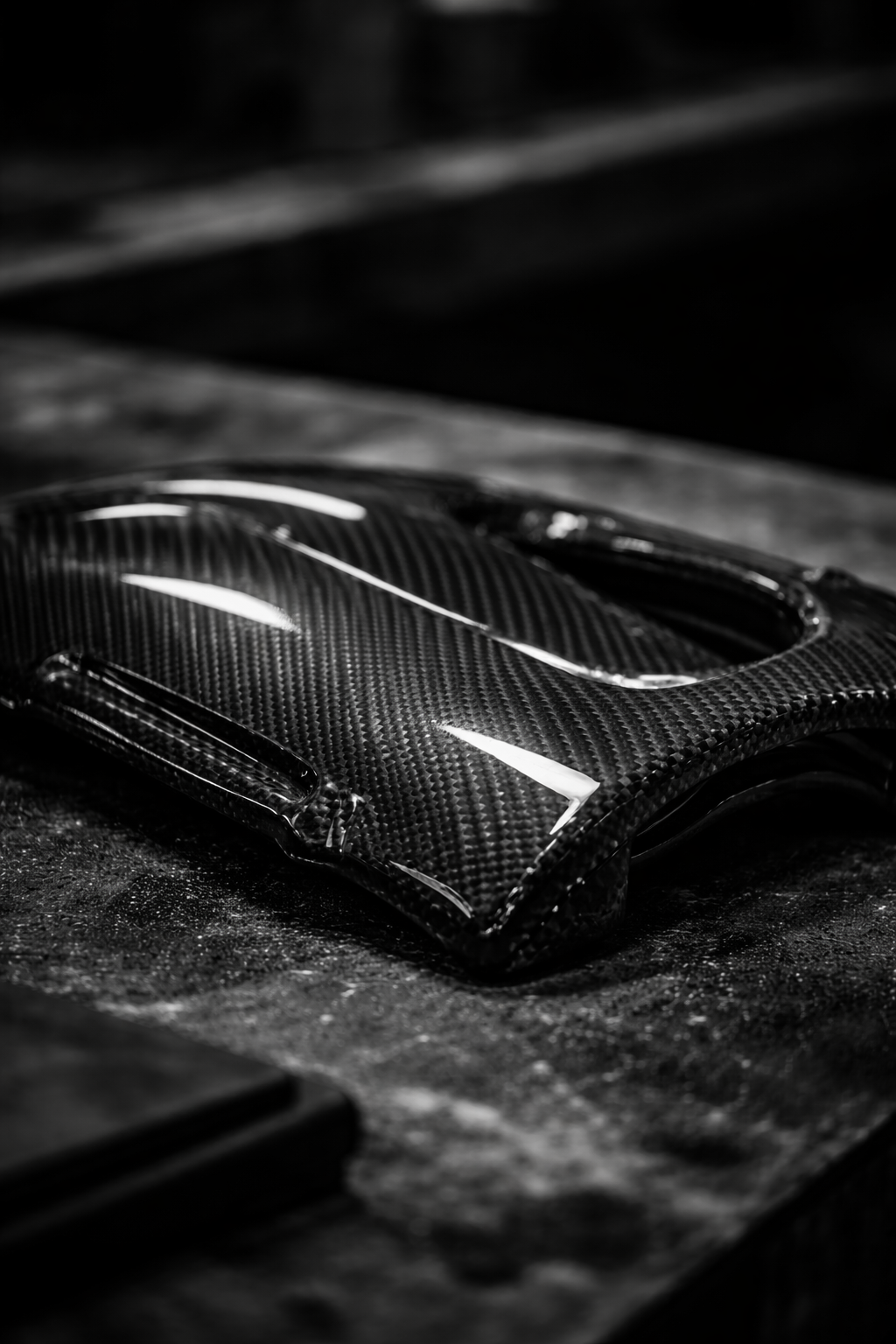
"When work is rushed, decision-making is the first thing to suffer."
IV. Time
There are moments when slowing down is essential. Sometimes to reassess a decision, sometimes to let a process settle, and sometimes simply because people are human and pressure changes judgement. Work should be enjoyed as much as possible. Stress rarely produces good outcomes.
When work is rushed, decision-making is the first thing to suffer. Quality follows. Accountability fades shortly after. Experience teaches that time is not linear. Two hours saved can easily turn into a week lost.
Clients do not always see the stages behind the finish, and that is understandable. A short clip online can make the outcome look instant. The reality is that this work is built in layers. Hydro dipping is a process with a sequence that has to be respected, and each stage needs the right conditions and the right time to settle.
Patience can be the difference between gaining two hours and losing a week.
Timing is knowing when to be patient and when to strike.
V. Responsibility
Being the face of the company means my name sits on everything. The good, the bad, and the ugly. I share the good and absorb the bad.
But responsibility does not sit above the work. It sits within it. The Vital family carries pride collectively, and pressure is taken upward, not passed down. When mistakes happen, they are corrected, not hidden. Processes exist to catch issues early, to protect both the customer and the people doing the work.
When a job leaves the unit, there is genuine satisfaction, especially when customers collect something personal and are clearly pleased. Much of the work involves items people already own, not replacements. That adds weight to every decision.
Nothing is perfect all the time. There has to be a margin. But if a defect will be noticed, it is corrected. Responsibility does not end at delivery. Depending on the job, it leaves behind a sense of pride, achievement, and accountability that stays long after the work is finished.